Castings

Product Overview

Castings

Types of Castings

Iron Casting

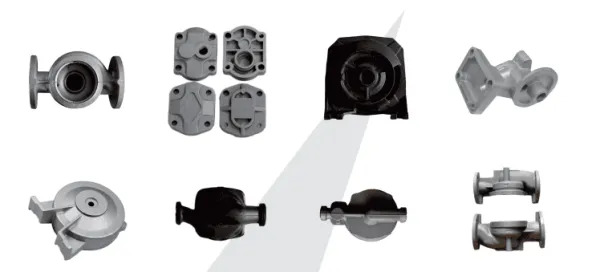
Our iron castings are engineered for durability, toughness, and long service life, making them ideal for heavy-duty industrial applications. They offer outstanding wear resistance, high compressive strength, and excellent vibration damping. Suitable for machinery bases, automotive components, and structural parts, our iron castings deliver stability and reliability in demanding environments.

Aluminium Casting

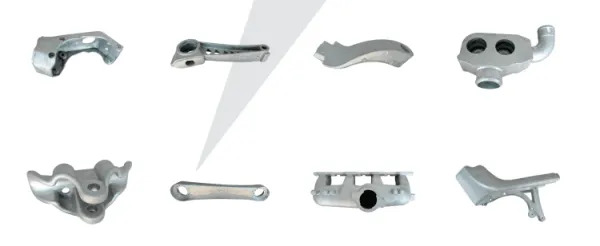
Our aluminum castings combine light weight with excellent strength and corrosion resistance. Designed for industries that demand precision and efficiency, they ensure high dimensional accuracy and excellent surface finish. With superior thermal conductivity and energy-saving properties, aluminum castings are widely used in automotive, aerospace, and machinery applications, helping customers reduce costs while improving performance.

FAQ

Q 1 : Is the machine difficult to maintain? Are the running costs high?
Maintenance is very simple. The machine is powered by compressed air, features a compact design, and has a low failure rate without complex electrical systems—keeping operating costs low. Additionally, the entire machine is built with cast components instead of welded steel plates, offering superior durability, better structural stability, and long-term resistance to deformation.
Q 2 : Do I need a skilled technician to operate this machine?
No. The machine features a micro-computer control system with one-touch startup. It’s designed for easy operation—any worker can operate it efficiently with minimal training. It also supports one-person-multi-machine management.
Q 3 : Is this sand molding machine compatible with my existing molds?
Yes, our machine supports both double-side and single-side pattern plates, making it compatible with a wide range of existing molds. It is especially ideal for reusing old molds, helping reduce tooling investment.
Q 4 : What types of sand can be used?
It supports coal powder sand, clay sand, and red sand, with no strict sand fineness requirements.
Q 5 : How fast is the molding cycle?
Approximately 36 seconds per box, depending on mold size and complexity.
Q 6 : How easy is mold replacement?
Template change takes under five minutes with six-screw fixation—ideal for frequent mold changes.
Q 7 : What is a sand preparation plant and why is it important in foundry production?
A sand preparation plant is a complete system for treating and recycling molding sand, ensuring stable sand quality for casting processes. It is essential because consistent sand properties directly affect casting accuracy, surface finish, production efficiency, and cost control.
Q 8 : What types of sand preparation plants do you offer?
We provide four main types: Clay Sand Production Line, Resin Sand Production Line, Lost Foam Casting Line, and Vacuum Process Casting Line. Each is designed for specific molding processes and casting requirements, offering options from cost-effective traditional methods to advanced high-precision systems.
Q 9 : How do I choose the right sand preparation plant for my foundry?

The choice depends on your casting type, production volume, precision requirements, and environmental considerations:

  • Clay Sand – Economical, ideal for mass production of iron and steel castings.

  • Resin Sand – High accuracy, suitable for complex or large castings.

  • Lost Foam – Near-net shape, reduces machining, ideal for intricate designs.

  • Vacuum Process – Binder-free, eco-friendly, ensures high precision and easy sand recycling.

Q 10 : What core sizes can your machine produce?
Our core shooting machines can be customized to produce a wide range of core sizes, from small precision cores to large, complex shapes, depending on your production needs.

Get a Quote!

Stay Up To Date On Product Releases, Events and Stories

Scroll to Top